Okay i’m gonna break it to you.. if you’re only wearing your SPF in the summer, you’re doing it wrong. If you’re NEVER wearing SPF, we need to talk…
Repeat after me: Sun. Damage. Is. The. Number. One. Cause. Of. Premature. Aging.
Fun Fact: When I was 18, I got a job at a local tanning salon. Honestly, I loved it- and I owe so much of who I am and where I am today from that job. I worked there for four years, and I had my tanning speech memorized and could say it in my sleep. “Make sure you have a lotion with tyrosine in it, its going to speed up the melanin process in your skin and allow you to tan faster”. Little did I know then, that the tanning process and darkening of the skin is your skins way of telling you it is DAMAGED. I used tanning beds almost daily back then, and I have the damage today on my skin to prove it.
So, lets talk about how the sun actually damages our skin: The sun gives off rays of light known as ultraviolet rays, or UV rays.
There are three mains types of UV ray: UVA, UVB, and UVC.
UVA – accounts for 95% of the UV radiation that reaches the earth and is used in tanning beds. UVA penetrates the skins second layer and penetrates glass and clouds (so yes, even if your aren’t going outside for the day, STILL WEAR SPF!!)
UVB– The main cause of skin reddening (sunburn). UVB damages the skins top layers and is linked to skin cancer. UVB can allow the skin to burn if unprotected in 15 minutes and will damage the skins DNA.
UVC– The shortest of UV rays. UVC is usually found in old school tanning beds or manmade sources like a lamp.
Wait… Why Should I be Wearing SPF in the Winter too?
Did you know… snow intensifies the suns UV rays by up to 90%… so yes, even if its a cloudy looking day and there is a ton of snow on the ground (I live in Manitoba, half of the year we have snow on the ground) those pesky UV rays will still penetrate through the clouds and reflect off of the snow, which can lead to sun damage if you are not protected. Did you know, 90% of all premature wrinkles are caused by sun damage? Yikes.
Also, the ozone layer (the earths sunshield) is thinnest in the winter, which means the UV rays are that much stronger and ready to attack your skin. Typically the suns rays are most intense from 10 AM to 4 PM, so make it a habit to put your SPF on every morning as a part of your morning skincare routine.
What Does Sun-damaged Skin Look Like?
The most common appearance of sun-damaged skin is: hyperpigmenntation (dark spots or “sun” spots), wrinkles, dry and flaky skin, and large pores.
There are some ways to reverse the damage, but it is expensive and will never completely eliminate the damage. A popular treatment to treat hyperpigmantation and dark spots is BBL (broad band light) treatment. At the skin clinic I work at, we use the BBL machine to treat hyperpigmentation. Addiotnally, at home proper skincare products is crutual to prevent further damage and treat the damages caused by the sun. Vitamin C serums are fantastic for helping to lighten the dark spots, while protecting our skin from free radicals in the air.
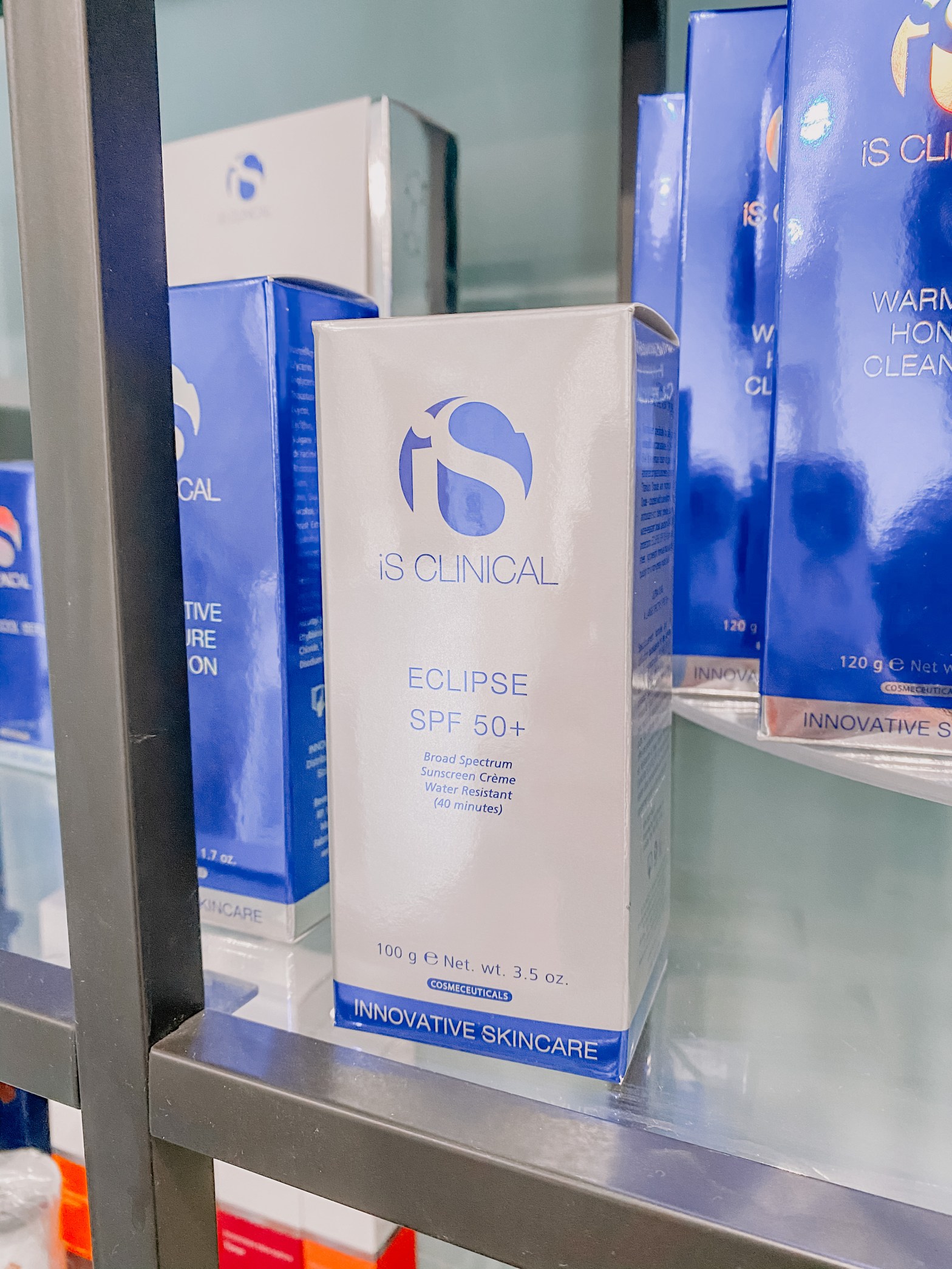
Let me clarify: IT IS NEVER TO LATE TO START TAKING CARE OF YOUR SKIN. This is where I come in, I work with my clients to help them meet their skin goals. A big part of this is selecting products that are specially for their skin type and concerns. My favourite SPF for daily use is the iS Clinical Eclipse SPF50+. There is a tinted and non tinted version, and I love it because it doesn’t make my skin feel greasy or cause breakouts.
Do you need help finding the right skincare products? Follow me on Instagram @lifestylebeauty.kate and send me a DM. I will perform a virtual consultation for you and ship products out to you. The medical grade skincare line I work with is iS Clinical, and I can’t wait to show you what it can do for your skin. If you have never heard of it… google it. So many celebs and top aestheticians in the world use this line, and it is AMAZING!
More posts to come in iS Clinical… in the mean time, WEAR YOUR DAMN SPF BABE!
Talk soon!
Kate, AKA- your fave local estie ❤
 Lifestyle Beauty by Kate